
THE WEEKLY EDIT
VOLUME 1 • ISSUE 3
When Life Doesn’t Slow
Down
Faithfulness in a heavy season isn't measured by how perfectly you maintain every rhythm. It's revealed by where you continually return with the weight.
THIS WEEK IN THE EDIT
When Life Doesn’t Slow Down
You established the rhythms. You made the plans. You intended to remain faithful.
And then life got heavy.
Suddenly, what once supported you feels harder to maintain, and you may find yourself wondering whether you're falling behind, losing your rhythm, or simply failing to carry everything well.
But what if faithfulness in a heavy season isn't measured by how much you manage to keep going?
This week in The Weekly Edit, we're exploring what it means to SUSTAIN when life doesn't slow down—not by becoming better at carrying the weight, but by learning to continually return it to God.
We'll talk honestly about heaviness, what Scripture teaches us about praise before circumstances change, how to discern what faithfulness requires when your capacity shifts, and why surrender sometimes has to happen again and again.
Because when you cannot maintain everything you established, there is still one rhythm you can return to:
Seek God. Surrender the weight. Listen for His direction. Take the next faithful step. And return again.
You don't have to have the ending to remain faithful in the middle.
There is grace for your YET.
INSIDE THIS ISSUE
01 — My Life…GOD’s Story - A Letter from Brandy
02 — Scripture Meditation
03 — Stop Measuring Faithfulness by How Much You Can Maintain
04 — A Rhythm of Return
05 — A Question I'm Sitting With
06 — One Tiny Shift Challenge
07 — WHOLE Reflection
08 — Reflection Before God with Scriptures
09 — Closing Prayer
10 — Resource of the Week

MY LIFE. . .GOD’s STORY
I'm in the Middle of My YET Praise
Somewhere between Issue #2 of The Weekly Edit and this one, I got heavy.
Life got heavy—not just for me, but for people I care for, serve with, pray for, and do life with. As an intercessor, I can find myself carrying the weight of what others are walking through too. But instead of simply reacting to everything happening around me, I made an intentional decision, I took my heaviness to the feet of Jesus, and there, God brought me to Isaiah 61:1–3—more specifically, verse 3.
“...a garment of praise instead of a spirit of despair. They will be called oaks of righteousness, a planting of the LORD for the display of his splendor.”
— Isaiah 61:3 NIV
But let me get a little more transparent. This week has been a lot. I can't fully explain the heaviness I've felt. I've even found myself questioning whether what I thought I heard from God was actually the right move. Have you ever been in a tight place, a cycle of hardship, or a situation that triggers something so deeply that you start questioning what you heard?
Was that really God?
Did He actually lead me here?
Or was that just me?
I've had moments when I've had to say, “Lord, I know what I thought I heard You say, but this doesn't look anything like what You and I discussed.”
MY LIFE. HIS STORY.
My finances have been on what feels like a seek-and-find mission for some time now as I've worked to rebuild my real estate business while adjusting to new responsibilities as a caregiver. God is showing me that even in the middle of my ugly cry, my questions, my testing, and the moments when I feel completely lost, I can still choose to remain faithful to Him. I can surrender again and I can take the next obedient step.
So what happened? I'm glad you asked. After months of working with a buyer to find her a home, we finally went under contract. It looked like she had found the one.THANK YOU, GOD!
And then, almost as quickly as it became the one... it wasn't. The inspection revealed significant problems, and ultimately the contract had to be terminated. I didn't understand. After all the work, all the time, all the expectation—I found myself asking God,
“Lord, give me wisdom and help me understand what You want me to see here. After all the work of my hands, how does this transaction fall completely apart? How does this help me rebuild my real estate business? How does this bring income into my family?”
Those were my real questions, but in the middle of all those questions, I had to become still.
“Be still, and know that I am God.” — Psalm 46:10
I didn't have to figure everything out in that moment. I didn't have to force an answer, fix the situation, or make another move out of fear. I needed to remember who God is. The circumstances hadn't changed. There wasn't another closing waiting around the corner that I knew about. There wasn't suddenly an answer explaining why it happened.
I was still in the YET.
And somewhere in that stillness, Promises by Maverick City Music came back to my mind. I remembered the faithfulness of God. And I began to praise Him.
Not because I suddenly understood.
Not because the transaction came back together.
Not because the financial pressure disappeared.
I praised Him while it was still unresolved.
I surrendered my feelings.
My thoughts.
My need to understand.
My disappointment.
My heart and my hurt.
I surrendered it back to Him because great is His faithfulness to me. I know I cannot handle it all. I cannot carry all this pressure. I cannot force something to happen that isn't His will. But I do know the One who holds what I cannot. And I'm learning that He will meet me in my YET praise. When I don't know what to do, I seek Him. When I'm still bound, I praise Him. When nothing I can see has changed yet, I rejoice in Him, and through it all, God is planting me more deeply in Himself.
Maybe that's what sustaining looks like, faithfulness in a heavy season isn't measured by how perfectly I maintain every rhythm. It's revealed by where I continually return with the weight. So I return…
I return in surrender.
I return in praise.
I return for His direction.
And when He gives me the next instruction, I obey.
I'm discovering a rhythm that isn't dependent upon my calendar, my circumstances, my energy, or whether life cooperates: SEEK. SURRENDER. PRAISE. LISTEN. OBEY. RETURN.
Life will change.
Seasons will change.
Plans will change.
Some prayers will be answered differently than I expected.
Some days will still feel heavy.
But there is one thing I want to remain constant, I will keep returning to God. I will seek Him in the details. I will surrender what I cannot carry. I will align myself with His will and I will trust that even when I cannot see what He is doing, He is still planting, strengthening, restoring, and establishing me.
I'm still in the middle of this story. I don't have the ending yet. But I have a YET praise and today, that's enough to take my next faithful step.
~Brandy Tennille
SCRIPTURE MEDITATION
What Does It Mean to Put on a Garment of Praise When Life Still Feels Heavy?
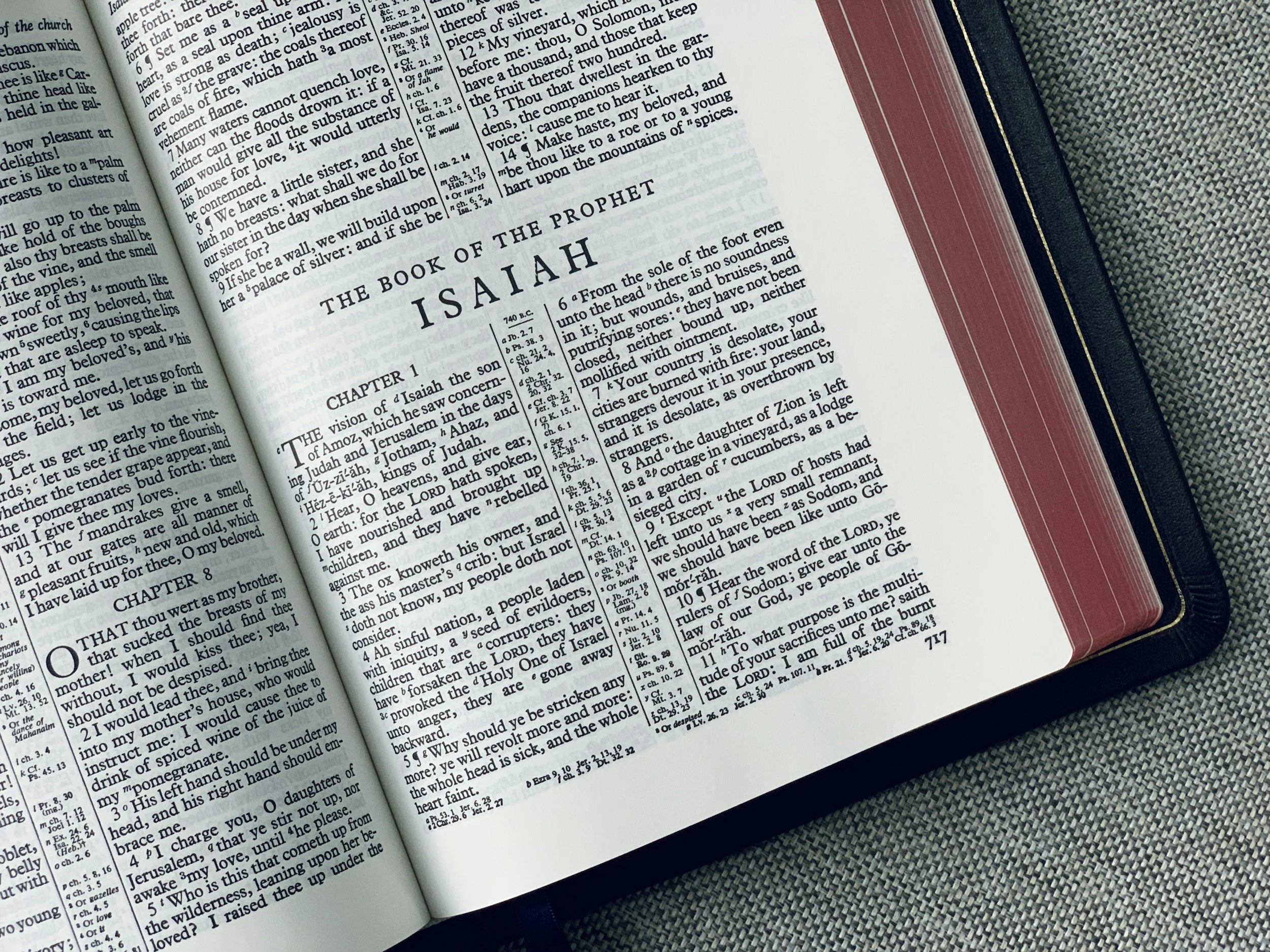
READ Isaiah 61:1-3 (NIV)
1 The Spirit of the Sovereign LORD is on me, because the LORD has anointed me to proclaim good news to the poor. He has sent me to bind up the brokenhearted,
2 to proclaim freedom for the captives and release from darkness for the prisoners, to proclaim the year of the LORD’s favor and the day of vengeance of our God, to comfort all who mourn,
3 and provide for those who grieve in Zion— to bestow on them a crown of beauty instead of ashes, the oil of joy instead of mourning, and a garment of praise instead of a spirit of despair. They will be called oaks of righteousness, a planting of the LORD for the display of his splendor.
CONTEXT
Isaiah 61 doesn't begin with people celebrating. It begins with the poor, the brokenhearted, the captive, the prisoner, and those who mourn. The passage announces God's restorative work toward people who have experienced devastation. He binds up. He liberates. He comforts. He restores. And in verse 3, we see a series of exchanges:
beauty instead of ashes
joy instead of mourning
a garment of praise instead of a spirit of despair
The NIV translates the final condition as “a spirit of despair.” Other translations render the underlying Hebrew idea as faintness, heaviness, or a disheartened spirit. The picture is of someone whose strength and hope have grown dim. That matters because sometimes heaviness doesn't look dramatic. Sometimes you simply feel depleted.
Your hope feels dim.
Your clarity feels dim.
Your strength feels dim.
Even the rhythms that normally keep you grounded can suddenly feel difficult to maintain, and God's response isn't simply, “Try harder.” The movement of the passage begins with what God provides. He meets people in their brokenness and does restorative work in them, giving them something in exchange—until those who are grieving are described as “oaks of righteousness, a planting of the LORD for the display of his splendor.”
The garment of praise isn't pretending the heaviness isn't real. It is part of learning to remain turned toward God while the heaviness is still real.
TRUTH
The garment of praise is not something I manufacture to prove that I’m strong. Isaiah presents it as part of God's restorative exchange for those who mourn and have become faint under the weight. I can acknowledge that I'm brokenhearted. I can acknowledge that I'm mourning. I can acknowledge that something feels heavy and I can still turn toward God. Praise doesn't require me to deny the weight. It allows me to remember that the weight isn't the only thing present—God is present too. And because He is present, I don't have to wait until everything changes before I worship Him.
That is what we see repeatedly throughout Scripture.
Jehoshaphat was afraid because an army was coming against Judah. He didn't know what to do, so he sought God. His prayer contains one of the most honest declarations for a heavy season:
“We do not know what to do, but our eyes are on You.”— 2 Chronicles 20:12 (NIV)
God gave Judah instructions, and they obeyed. Praise went before them as they approached a battle they could not fight in their own strength.
Paul and Silas praised from another kind of heavy place. They had been beaten. They were imprisoned. Their feet were still in stocks and at midnight—before the earthquake, before the doors opened, before the chains came loose—they prayed and sang hymns to God. Their praise happened while the evidence still said bound. See Acts 16:22–34.
Then there is Habakkuk. His praise doesn't come after visible restoration at all. He looks at failed crops, empty fields, and disappearing livestock and declares:
“Yet I will rejoice in the LORD; I will joy in the God of my salvation.” — Habakkuk 3:18 (KJV)
That's the YET praise.
This is what I see.
This is what hurts.
This is what hasn't changed.
Yet God is still God.
Yet He is still worthy.
Yet I will turn toward Him.
Putting on praise doesn't mean denying what is heavy. Praise refuses to let the heaviness have the final word about who God is.
CONFRONTATION
But this confronts something in us. When life gets heavy, where do we go first? Do we immediately start trying to fix it? Do we rehearse the problem until it becomes louder than God's voice? Do we withdraw from the very rhythms that once kept us close to Him? Do we interpret difficulty as evidence that God has abandoned us—or that we somehow heard Him wrong? Do we keep carrying something because we're afraid of what might happen if we release it? And perhaps the hardest question,
“Have I made praise dependent upon an outcome?”
I'll praise when the money comes.
I'll praise when the relationship changes.
I'll praise when the diagnosis improves.
I'll praise when the door opens.
I'll praise when I finally understand why God allowed this.
But Paul and Silas praised before the chains fell.
Jehoshaphat sought God while the army was still approaching.
Habakkuk rejoiced while the fields were still empty.
Their circumstances didn't determine whether God was worthy and neither do ours.
TESTIMONY + APPLICATION
That's what I'm learning in my own YET. When the real estate transaction fell apart, the financial pressure didn't suddenly disappear because I prayed. I still had questions. I still wanted understanding. I still wanted God to show me how, what I was experiencing, fit with what I believed He had spoken. But Psalm 46:10 reminded me,
“Be still, and know that I am God.”
Before another strategy, another decision, another attempt to make something happen—I needed to remember who God is. And that stillness made room for praise. Not praise because everything worked out. Praise because God is still faithful while I'm waiting to see how it works out. That's an important distinction. Praise isn't another task to perform correctly when you're already exhausted. Praise is a place to return. When life becomes too heavy to maintain every rhythm perfectly, return to the rhythm that brings the weight back to God.
RESPONSE
Maybe today you don't need another plan. Maybe you need to bring God what feels heavy.
Start here:
SEEK.
Lord, I don't know what to do, but my eyes are on You.
SURRENDER.
I cannot carry this and control the outcome. I give it back to You.
PRAISE.
Before anything changes, I will remember who You are.
LISTEN.
Lord, what are You saying to me here?
OBEY.
What is mine to do next?
RETURN.
And when the weight begins creeping back into your hands tomorrow, come back again. This isn't a formula for making the problem disappear. It's a rhythm for remaining planted while you walk through it. Because perhaps sustaining faithfulness was never about becoming strong enough that life's storms couldn't affect us. Perhaps it is about becoming deeply rooted enough to know where to return when they do.
And when nothing you can see has changed yet? Praise Him in the YET. You are not praising because the story is finished. You are praising because God is still faithful in the middle of it.
PRAYER RESPONSE
Father, when life feels heavy, teach me to return to You before I return to fear, control, or striving. Help me tell You the truth about what I'm carrying without allowing what I see to become greater than what I know about You. When I don't understand, I will seek You. While I wait, I will praise You. And in my YET, help me remain planted, surrendered, and obedient to whatever You ask me to do next.
In Jesus’ Name Amen.
THE ORDER OF THE WEEK
Stop Measuring Faithfulness by How Much You Can Maintain
When life gets heavy, one of the first things we notice is everything we're no longer doing well. The morning routine gets interrupted. The house isn't as orderly. The workout gets missed. The meal plan changes. The prayer time doesn't look the way it normally does. The work we intended to finish remains unfinished. And before long, we're not only carrying the original weight—we're carrying the guilt of everything we think we should still be maintaining.
But what if faithfulness in a heavy season looks different than faithfulness in a lighter one? There is a difference between abandoning what God has entrusted to us and adjusting how we steward it because our present capacity has changed. That's important.
In Issue #2, we established rhythms to support what God has entrusted to us in this season. But those rhythms were never meant to become another standard by which we measure our worth or spiritual maturity. The rhythm serves the assignment. The assignment doesn't serve the rhythm. So when circumstances change, the question isn't necessarily,
“How do I keep everything going?”The better question may be, “Lord, what does faithfulness require of me here?”
Maybe the hour you normally spend with God becomes fifteen intentional minutes because you're caring for someone who needs you.
Maybe dinner is simpler this week.
Maybe the house isn't cleaned on the usual day.
Maybe the project moves more slowly.
Maybe you need to ask for help.
Maybe something that normally matters needs to temporarily move lower on the list.
That isn't automatically failure. Sometimes it is wise stewardship of limited capacity.
ORDER REQUIRES DISCERNMENT
Heavy seasons can tempt us toward two extremes. We either force ourselves to maintain everything, even when we're depleted— or we become so overwhelmed that everything gets dropped. God's order offers another way. We can bring the season before Him and ask:
What must remain?
What is essential to my relationship with God and the responsibilities He has actually entrusted to me?
What can adjust?
What still matters but doesn't have to happen the same way, at the same frequency, or at the same level right now?
What can wait?
What is good, but isn't required of me in this season?
What needs to be released?
What am I carrying because of guilt, expectation, fear, or my own need for control rather than God's instruction?
This is where surrender becomes practical. Because sometimes surrender isn't releasing the entire responsibility. Sometimes surrender is releasing the way I thought the responsibility had to be carried.
PROTECT YOUR RETURN
There may be days when you cannot maintain every rhythm you've established. But there is one rhythm worth protecting, your return to God. Not because you performed your devotional routine perfectly. Not because you checked every box. Not because you held everything together. But because when the weight became too much, you knew where to take it. Jesus gives us this invitation,
“Come to me, all you who are weary and burdened, and I will give you rest.” — Matthew 11:28 NIV
Notice the invitation isn't, get everything back under control, then come. It's come.
Come weary.
Come burdened.
Come without the answer.
Come when the rhythm broke.
Come when you don't know what to do next and from that place, allow God to show you what faithfulness looks like today.
THIS WEEK'S ORDER
This week, don't begin by asking, How can I get everything back on track? Bring your actual capacity before God and ask,
“Lord, what have You entrusted to me in this season, and what does faithfulness with it look like today?”
Then give yourself permission to obey the answer—even when today's obedience looks different from yesterday's routine. Some things may need to continue. Some may need to adjust. Some may need to wait. Some may need to be released altogether. But through every adjustment, protect the rhythm that brings you back to the Source.
Because SUSTAIN isn't about keeping everything going. It's about continuing to return to the God who sustains you.
~Brandy Tennille
PRACTICAL STEWARDSHIP
A Rhythm of Return
Heavy seasons don't always announce themselves. Sometimes you're moving through your day when the phone rings. An unexpected bill arrives. Someone you love needs you. A plan falls apart. The conversation doesn't go the way you expected, or maybe nothing new happens at all—the weight you've been carrying simply feels heavier today. Our instinct can be to immediately react. Fix it. Figure it out. Make another plan. Carry more. Work harder. But before you decide what to do with the weight, bring the weight to God.
This week, practice this rhythm:
SEEK
Turn toward God before turning toward the solution.
You don't need the perfect prayer. Tell Him what happened. Tell Him what you're feeling. Tell Him what you don't understand. Jehoshaphat's prayer gives us language for these moments:
“We do not know what to do, but our eyes are on you.” — 2 Chronicles 20:12 NIV
Sometimes seeking begins that simply. God, I don't know what to do. But I'm looking to You before I decide what comes next.
SURRENDER
Separate what you're responsible for from what only God can carry.
Ask yourself:
What is actually mine to steward here?
What outcome am I trying to control?
What am I carrying that I need to place back into God's hands?
Surrender doesn't mean you stop caring.
It means you stop assuming responsibility for what was never yours to control.
PRAISE
Remember who God is before the circumstances change.
This is your YET praise. You can tell the truth about what is happening and still tell the truth about God.
This is hard, yet God is faithful.
I don't understand, yet God is wise.
I don't know what happens next, yet God is with me.
I don't see the provision yet, but God is still my Provider.
Praise isn't pretending. It's remembering.
LISTEN
Now become still.
“Be still, and know that I am God.” — Psalm 46:10 NIV
Resist the pressure to immediately fill the silence with another plan.
Ask:
Lord, what are You showing me?
Is there something I need to release?
Is there something I need to adjust?
Is there something You are asking me to do?
Is there something I simply need to trust You with today?
You may not receive an explanation for why something happened. The goal isn't to force an answer from God. The goal is to become attentive to Him.
OBEY
Take the next faithful step—not every possible step.
Maybe the next step is making a phone call.
Changing the budget.
Asking for help.
Resting.
Having a difficult conversation.
Finishing one necessary task.
Waiting or doing nothing more until you have greater clarity.
You don't need enough direction for the entire journey to obey God with the step in front of you.
RETURN
Then tomorrow, do it again if necessary. Because surrender isn't always a one-time event. You may give something to God in prayer at 8:00 a.m. and discover that you've picked it back up by noon.
Just return.
The goal isn't to condemn yourself for picking up the weight again. The rhythm simply teaches you where to take it when you notice you're carrying it.
PUT IT INTO PRACTICE THIS WEEK
Choose one thing that currently feels heavy.
Not your entire life. One thing. Write it at the top of a page:
WHAT FEELS HEAVY RIGHT NOW?
Then move through your Rhythm of Return:
SEEK — What do I need to bring honestly before God?
SURRENDER — What am I carrying or trying to control that belongs in God's hands?
PRAISE — What remains true about God even though this hasn't changed?
LISTEN — What might God be asking me to notice, release, adjust, or trust?
OBEY — What is my next faithful step?
RETURN — When this becomes heavy again, where will I take it?
Don't leave this exercise with ten new things to accomplish. Leave with one surrendered weight and one faithful next step. Because practical stewardship in a heavy season isn't about proving how much you can manage. It's knowing what belongs in your hands, what belongs in God's hands, and what obedience requires of you today.
SEEK → SURRENDER → PRAISE → LISTEN → OBEY → RETURN
That is a rhythm you can return to no matter what season you're walking through.

A QUESTION I'M SITTING WITH
What am I doing with the weight I feel?
When life gets heavy, I want to pay attention not only to what I'm carrying, but to what I do with it.
Do I rehearse it?
Do I worry over it?
Do I try to control the outcome?
Do I carry it quietly until I'm depleted?
Or do I bring it honestly before God?
I'm learning that the weight itself isn't always mine to remove—but where I take it is a choice I can make.
So this week, I'm sitting with one simple question before God:
What am I doing with the weight I feel? Have I truly placed this in God's hands—or have I only asked Him to help me carry what I'm still unwilling to release?
I don't want to rush past that question.
I want to sit before God long enough to recognize what I've picked back up—and open my hands again.
“Be still, and know that I am God.” — Psalm 46:10 NIV

ONE TINY SHIFT CHALLENGE
Put It Down Before You Pick Up the Next Thing
When you notice the weight getting heavy today, pause before doing anything else.
Ask:
“God, what am I carrying right now that I need to give back to You?” Name it. Surrender it. Then ask, “What is my next faithful step?” You don't have to figure out everything before you move forward. Be faithful with what God is asking of you now.
Release the weight.
Take the next faithful step.
And when you find yourself carrying it again—return.
Because the tiny shift isn't learning where to take the weight. It's building a consistent rhythm of returning the weight to the One who was always meant to carry it.
THE WHOLE REFLECTION
Where Is the Weight Showing Up?
Heaviness rarely stays contained to one area of our lives. What weighs on our hearts can affect how we care for our bodies, show up at home, approach our work, think about our future, and even experience joy.
This week, don't use WHOLE to evaluate how well you're doing.
Use it to notice where you need God.
W — WORSHIP & WELLNESS
Where am I feeling depleted spiritually, emotionally, or physically?
What would returning to God and caring for myself faithfully look like today?
H — HOME & HEART
What weight am I carrying in my heart that is affecting how I am showing up at home?
What do I need to bring honestly before God?
O — OVERFLOW WORK
Where has pressure made me feel like I have to force, fix, or make something happen?
What is mine to faithfully steward—and what outcome do I need to surrender?
L — LIFE & LEGACY
What am I afraid this heavy season means about my future?
What truth about God do I need to remember while the story is still unfolding?
E — ENJOY & EXPERIENCE
Have I allowed the weight I'm carrying to make me believe I cannot experience joy until everything is resolved?
What small gift from God can I receive and enjoy today, even in the middle of my YET?
You don't have to leave this reflection with five new assignments.
Notice where the weight is showing up. Bring it before God. Then respond faithfully to the one area He brings to your attention.
W
WORSHIP & WELLNESS
H
HOME & HEART

OVERFLOW WORK
O
L
E
LIFE & LEGACY
ENJOY & EXPERIENCE
REFLECTION BEFORE GOD
Take a few quiet moments before the Lord. Don't rush to answer. Ask Him to reveal what He wants you to see.
RECOGNIZE | Psalm 139:23–24
Lord, where is heaviness showing up in me right now, and what is it revealing about what is happening in my heart?Don't rush to fix what comes up. Ask God to help you see it clearly and honestly.
CONFRONT | Psalm 46:10
What have I been doing with this weight instead of becoming still and trusting God with it?Consider where worry, striving, control, avoidance, or repeatedly rehearsing the problem may have replaced your return to Him.
SURRENDER | 1 Peter 5:6–7
What am I still trying to carry, control, or resolve that God is asking me to place completely into His hands—and what would surrender require of me now?Stay here for a moment. Name the weight before God. Release the outcome you cannot control, and ask Him to show you the next faithful act of obedience.
You don't have to leave God's presence with every answer. You can leave knowing the weight is in His hands—and your next step is enough.

CLOSING PRAYER
For the Woman Carrying Something Heavy
Dear Heavenly Father,
I come before You for the woman who is carrying something heavy.
You know what it is.
You know the thing she hasn't told anyone.
The thing she keeps replaying in her mind.
The thing she has prayed about and still doesn't understand.
The thing she thought would have changed by now.
You see her, Lord. You see the tears she wipes away before anyone notices. You see the questions she is afraid to ask out loud. You see where she has been trying to remain strong because other people depend on her and Father, You see where she is tired. So right here, I ask You to meet her. Not when she gets herself together. Not when she has a better attitude. Not when she figures out what to do next.
Meet her here.
In the disappointment.
In the uncertainty.
In the waiting.
In the financial pressure.
In the family burden.
In the unanswered prayer.
In the place where she is wondering, God, did I hear You correctly? Father, quiet the noise long enough for her soul to remember, You are God. When she doesn't know what to do, turn her eyes toward You. When she feels bound by what she cannot change, put praise back in her mouth. When everything she sees tells her the story isn't working out the way she expected, give her the faith to say, “Yet I will rejoice in the Lord.”
And Father, forgive us for the weight we have picked back up after placing it in Your hands. Forgive us for calling it responsibility when sometimes it has been control. Forgive us for believing that being faithful meant holding everything together. Forgive us for allowing fear to convince us that if we don't carry it, fix it, manage it, or figure it out, everything will fall apart.
We surrender again.
The outcome—we surrender it.
The timing—we surrender it.
The need to understand—we surrender it.
The people we love but cannot change—we surrender them.
The provision we need—we place it before You.
The doors we thought would open—we surrender them.
The doors that closed and left us confused—we surrender those too.
Even the picture we created in our minds of how we thought this season was supposed to look—we give it back to You. Father, give us a garment of praise instead of a spirit of despair.
Not praise that pretends it doesn't hurt.
Not praise that tries to manipulate You into changing our circumstances.
Not praise that denies the reality of what we're facing.
But praise that declares:
You are still God here.
You are still faithful here.
You are still present here.
You are still worthy here.
And even here, we belong to You. Plant us deeply in You, Lord. When the winds come, remind us where our roots are. When our strength feels small, remind us that You are our strength. When our rhythms fall apart, teach us to return. When we pick the weight back up, teach us to surrender again. When we cannot see ten steps ahead, give us courage for the next faithful one.
For the woman who doesn't have the strength for a long prayer today, hear the prayer underneath her tears.
For the woman whose only words are, “Jesus, help me,” meet her there.
For the woman who doesn't know what to do—turn her eyes toward You.
For the woman still waiting—meet her in her YET.
And for the woman wondering whether she can keep going—remind her that she was never called to sustain herself. You are the One who sustains her.
So today, Father, we put the weight down again. We open our hands. We become still. We remember who You are. And before we know how the story ends, we choose to trust You in the middle of it.
Teach us to seek You.
Teach us to surrender.
Teach us to praise.
Teach us to listen.
Give us courage to obey.
And when life becomes heavy again—teach us to return.
We don't need to carry tomorrow today. Give us grace for this moment, wisdom for this decision, strength for this step, and enough faith to keep our eyes on You. We surrender the weight. We surrender the outcome. And we surrender ourselves again.
In Jesus' name, Amen.
CONTINUE THE JOURNEY
The Weekly Edit is published every Friday with Scripture, prayer, honest reflection, and practical stewardship for women becoming who God is calling them to be.

THIS WEEK’S RESOURCE
The WHOLE Daily Rhythm Guide
When life feels heavy, you don't need another complicated routine to maintain.
The WHOLE Daily Rhythm Guide is a simple tool to help you bring your whole life before God—Worship & Wellness, Home & Heart, Overflow Work, Life & Legacy, and Enjoy & Experience—and prayerfully consider what faithfulness looks like today.
Use it as a guide, not a measuring stick.
The goal isn't to do everything. It's to remain close to God, discern what matters in this season, and take your next faithful step